

Join us on this trip to Boy Scout Woods, Smith Oaks, The Rookery, and more!
Location: From under an ancient sea, a salt dome emerged. After a few thousand years the dome reached 38 feet above a pancake-flat coastal plain; the highest point-of-land on the immediate coast from Mobile Bay to the Yucatan Peninsula. This is High Island, which is now a wooded beacon amongst the coastal marshland providing food, water, and places to rest for weary Gulf migrants.
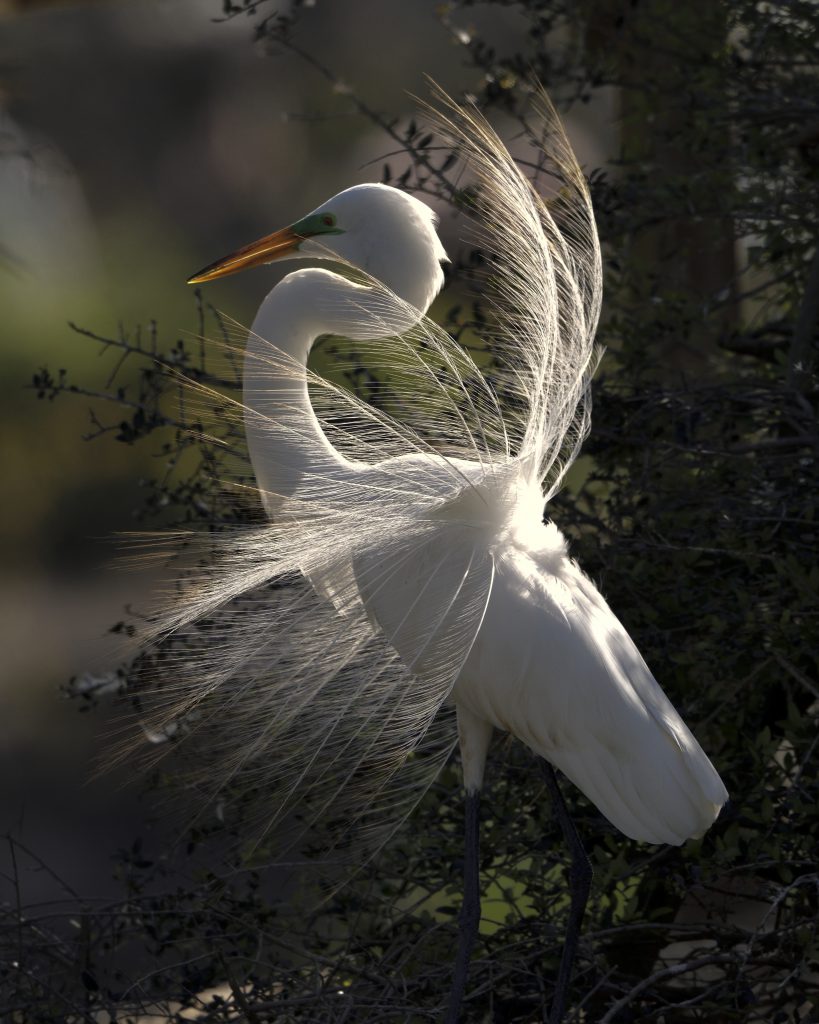
A community of Texas birders of the Houston Audubon Society (HAS) created several sanctuaries in the area. In time, High Island’s beacon pulled in birders from around the world for a few weeks every year. This visit will be to HAS’ premier Smith Oaks Sanctuary. One of the best features is a man-made reservoir, Clay Bottom Pond. Colonial waterbirds, who prefer islands for nesting to deter mammalian predators, found the U-shaped Island in the middle of the pond perfect for a rookery. Nine species of heron, egret, spoonbill, ibis, cormorant, and Anhinga nest within inches of each other. The High Island rookery offers birders a close view of the annual dramedy of waterbird nesting activity including vibrant breeding plumage, mating hustle and nestlings. Read more about High Island on the Houston Audubon website.
What to Expect: We plan to visit three HAS and Texas Ornithological Society (TOS) sites at High Island. Expect the annual arrival of dozens of neotropic migrants along with local and resident waterfowl, raptors, seabirds, shorebirds, and passerines. April weather fronts can produce 30 or more species of songbirds in a single day!
Heading back down the Bolivar Peninsula’s Hwy 87, we return to Galveston. Time permitting, there may be stops along the way. The peninsula holds habitat zones that drift between brackish and briny depending on the tides. These habitats serve as the hatcheries for many species of saltwater fish. Fresh water is available on Bolivar too. Between Bolivar’s shores lie patches of coastal prairie grasses, willow and mangrove that surround rain charged ponds. This attracts dozens of interesting waterfowl, herons, egrets, marsh, and shore birds. Trips are led by local, skilled birders with many years of migration birding experience.
What to Bring: water, lunch, sunscreen, insect repellent, and wear closed-toed walking shoes.
Important Information: Participants will begin at FeatherFest Headquarters where they will board a bus for this field trip.